

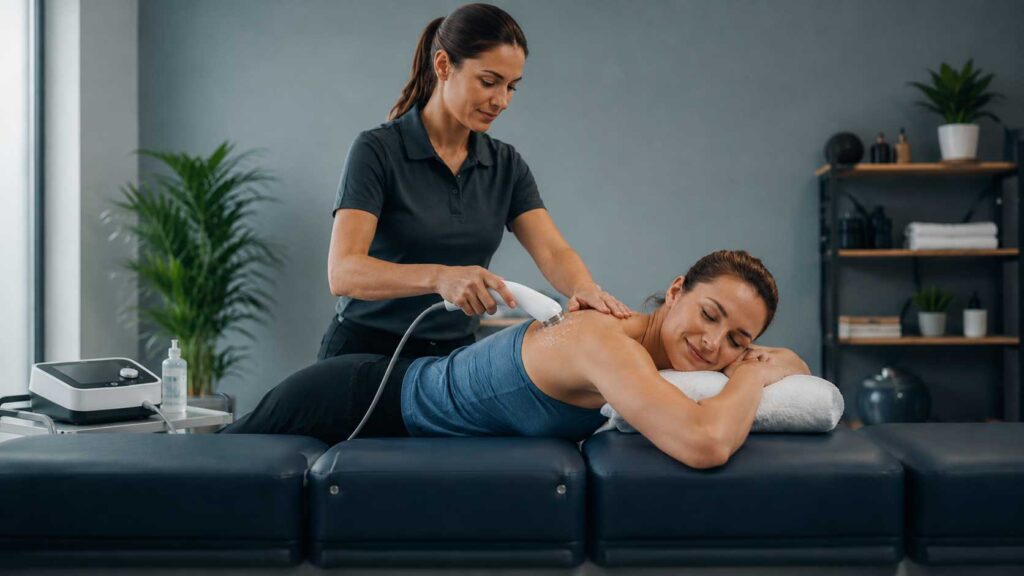

Therapeutic Ultrasound
Therapeutic ultrasound uses high-frequency sound waves—well above the range of human hearing—to deliver gentle energy to soft tissues. Depending on the settings used, it may create a mild warming effect and is sometimes used as one part of a broader treatment plan for pain, stiffness, or limited mobility.
During treatment, a clinician applies ultrasound gel and moves a small treatment head over the targeted area. Most patients feel little or nothing during the session, although a mild sense of warmth may occur. Let your clinician know immediately if you feel burning, aching, or discomfort.
Treatment sessions are typically brief, often lasting a few minutes, and may be scheduled as part of a series depending on your condition and overall care plan. Therapeutic ultrasound is generally used alongside other approaches, such as chiropractic care, exercise, stretching, or rehabilitation recommendations, rather than as a stand-alone treatment.
Research on therapeutic ultrasound varies by condition, with some studies showing possible benefit for certain musculoskeletal concerns and others finding limited benefit. Your clinician can help determine whether it may be appropriate for your individual needs.
Electrical Muscle Stimulation
Electrical muscle stimulation uses gentle electrical impulses delivered through adhesive pads placed on the skin. Depending on the treatment settings and your condition, it may be used to help manage pain or to create a controlled muscle contraction as part of a rehabilitation plan. Electrical stimulation may influence pain signals and can also be used to activate specific muscles when movement or muscle control needs support.
The sensation can feel unusual at first, but it should not be painful. Many patients describe it as tingling, buzzing, tapping, or a light muscle twitch. When muscle activation is part of the treatment, the contraction can range from mild to more noticeable depending on the goal of care.
Your clinician will adjust the settings based on your comfort and response. Let them know right away if the treatment feels sharp, burning, painful, or more intense than you can comfortably tolerate. Electrical stimulation is typically used as one part of a broader care plan that may also include chiropractic care, movement, stretching, exercise, or other supportive therapies.