


Chiropractic Care for Athletes
High school, college, and professional athletes often seek chiropractic care to help manage musculoskeletal pain, support mobility, and stay active throughout training and competition. In the Columbus area, many athletes pursue chiropractic care on their own, while more schools, athletic programs, and professional organizations are incorporating chiropractic physicians into broader sports medicine and rehabilitation teams.
As a former high school and college athlete, I have tremendous respect for athletic trainers, physical therapists, orthopedists, and other medical professionals involved in an athlete’s care. I have also seen how chiropractic care can complement traditional medical treatment when it is used appropriately as part of a coordinated care plan.
Chiropractic care is not a substitute for emergency care, orthopedic treatment, surgery, rehabilitation, or other necessary medical interventions. It cannot prevent or resolve every injury. However, for appropriate conditions involving the spine, joints, muscles, and movement, chiropractic care can be a valuable component of an athlete’s overall healthcare strategy.
Athletes place significant demands on their bodies. Repetitive movement, contact, lifting, running, jumping, travel, and long training schedules can contribute to stiffness, joint dysfunction, muscle tension, and discomfort. Chiropractic care may help athletes address these concerns, improve mobility, and return to activity with a more balanced and functional musculoskeletal system.
Over the years, many elite athletes and professional teams have publicly supported chiropractic care as part of their personal wellness and performance routines. From football and baseball to golf, boxing, and Olympic competition, chiropractic care has become increasingly common within the broader sports medicine landscape.
For young athletes, weekend competitors, and seasoned professionals alike, the goal is the same: stay active, move well, and address problems before they become more limiting. Chiropractic care can help support the health of your neck, back, joints, and surrounding muscles while working alongside the care you receive from your physician, trainer, therapist, or specialist.
Whether you are preparing for a season, recovering from a strain, or simply trying to stay active, chiropractic care may be an effective part of your plan for healthier movement and athletic longevity.
Understanding Scoliosis
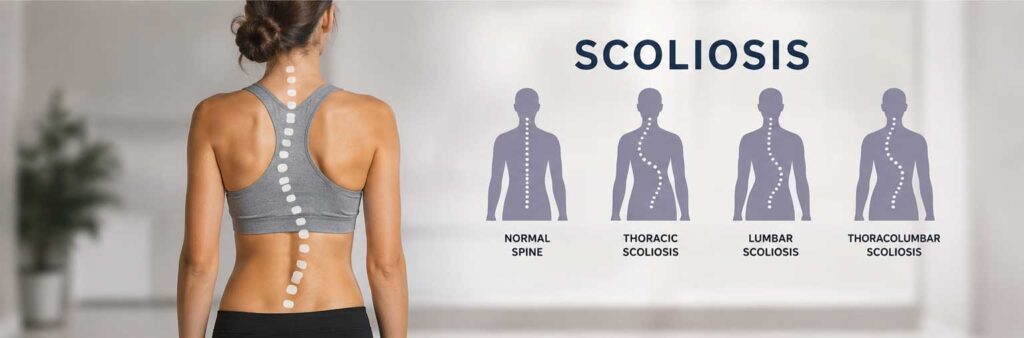
Scoliosis is a condition in which the spine develops a sideways curve, often accompanied by rotation of the vertebrae. While it is commonly noticed in the mid-back, scoliosis can affect the alignment and function of the entire spine.
The most common form is adolescent idiopathic scoliosis, meaning that the precise cause is not known. It most often develops during periods of rapid growth and is diagnosed more frequently in girls than boys. Although scoliosis can occur at any age, it is commonly identified during childhood and adolescence.
Many mild curves cause little or no discomfort and may only require periodic observation. More pronounced curves, however, can progress as a child grows and may affect posture, movement, spinal balance, and—in severe cases—overall physical function. Early evaluation is important because the best course of care depends on the patient’s age, growth stage, symptoms, and the degree and location of the spinal curve.
Scoliosis is generally measured using the Cobb angle on spinal X-rays. A curve under 10 degrees is not typically classified as scoliosis. Curves in the mild range are often monitored over time, particularly in growing children. Moderate or progressing curves may warrant referral to an orthopedic specialist and, in some cases, bracing. Severe curves may require more advanced orthopedic evaluation and possible surgical consultation.
Chiropractic care may play a supportive role for certain patients with scoliosis, particularly those experiencing stiffness, muscle imbalance, back discomfort, or reduced mobility. Care may include gentle chiropractic treatment, posture guidance, mobility work, and individualized exercises intended to support spinal function and overall movement.
Chiropractic care is not a replacement for orthopedic management when bracing, specialist monitoring, or surgery is indicated. Instead, it can be part of a coordinated approach that includes the patient, family, pediatrician, chiropractor, physical therapist, and orthopedic specialist as appropriate.
The most important step in scoliosis management is early detection. Regular pediatric examinations, school screenings, and prompt evaluation of uneven shoulders, uneven hips, a prominent shoulder blade, or changes in posture can help identify a curve before it progresses. When scoliosis is recognized early, patients and families have more time to make informed decisions about monitoring and treatment.